


Avalo: Harvesting Data to Grow More Efficient Cotton
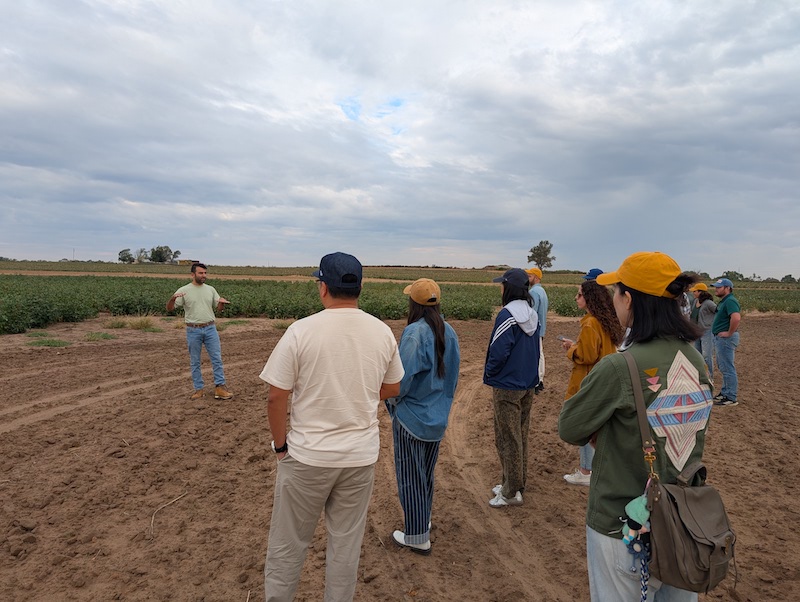
Several denim industry insiders, including Kingpins CEO Vivian Wang, recently got a first-hand look at Avalo’s cotton operations in Clarendon, Texas.
Organized by Avalo’s Chief Commercial Officer, Tricia Carey, and featuring many members of the Avalo team, including co-founder Mariano Alvarez, who serves as Chief Science Officer, and Rebecca White, Avalo’s Chief Product Officer, the event highlighted the work Avalo is doing to leverage the power of Ai and machine learning to tailor cotton plants to specific growing environments and select for key traits to help farmers grow the most efficient and productive cotton.
“Cotton is interesting, said Alvarez, noting that despite “an enormous supply chain,” cotton does not get the same attention as other crops like corn.
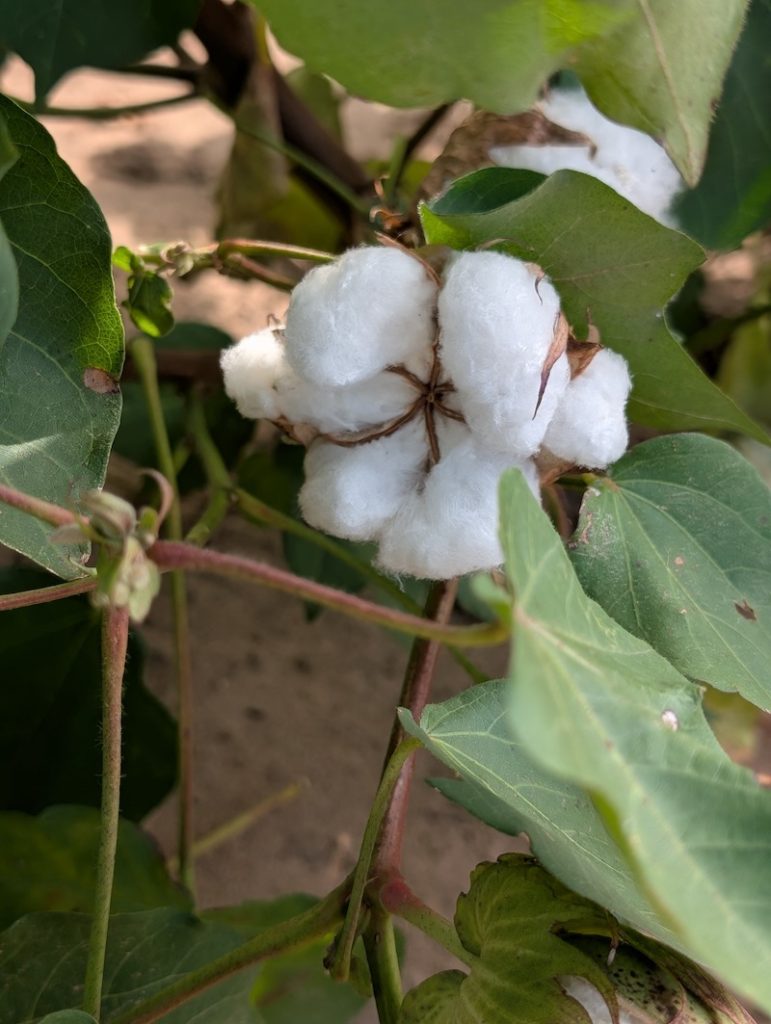
Avalo describes itself as “an Ai-power crop innovation company.” The company’s cotton is not genetically modified. Instead, Avalo employs its Rapid Evolution PlatformTM to create crops that are regionally adapted to their environment. In the Texas panhandle, that often means adapting for no or low-irrigation farming.
Data is at the heart of Avalo’s operations. The company’s R&D plot in Clarendon features 500 different types of cotton seed grown over five acres.
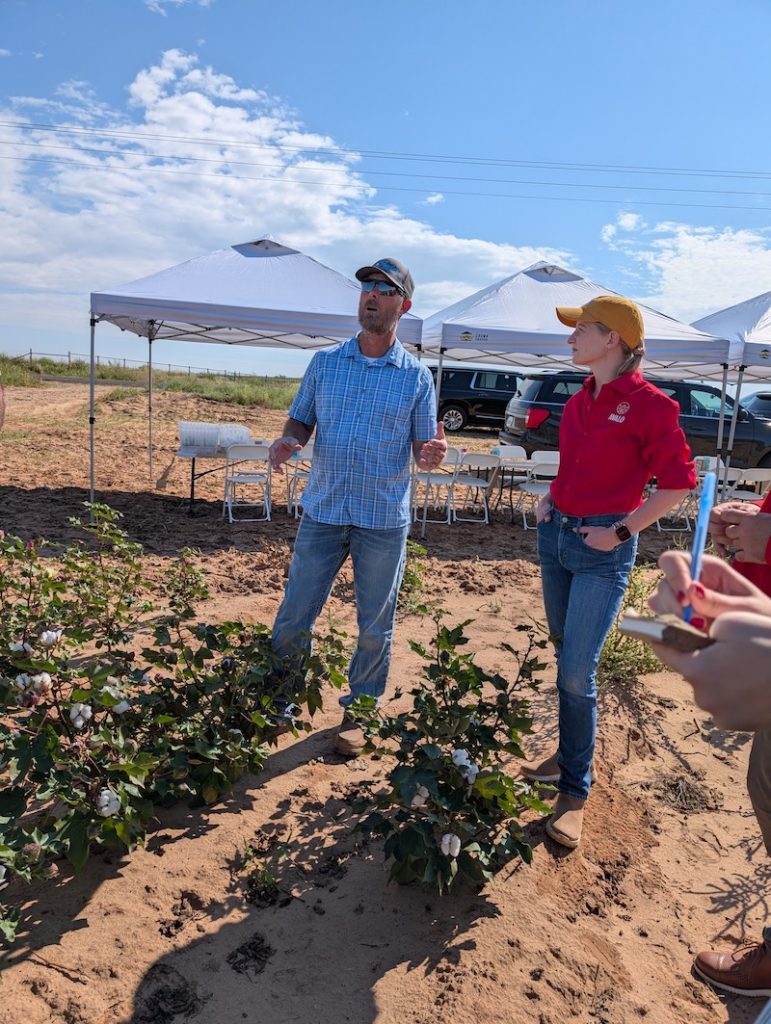
When the denim group arrived at the rain-fed field on Sept.30, many of the plants were in full fruit. Each section was marked off by cotton seed variety and there were some clear differences between the sections. Some plants were taller and there was some variety in cotton color. The Clarendon plot is one of three R&D plots Avalo runs. Cotton is transplanted from the company’s Greenhouses in Durham, N.C.
“If we’re going to get data, we prefer that it is more realistic than in the lab,” Alvarez said.
The Avalo team went to the USDA seed bank in College Station and selected 500 varieties of cotton seed to plant in the R&D field.
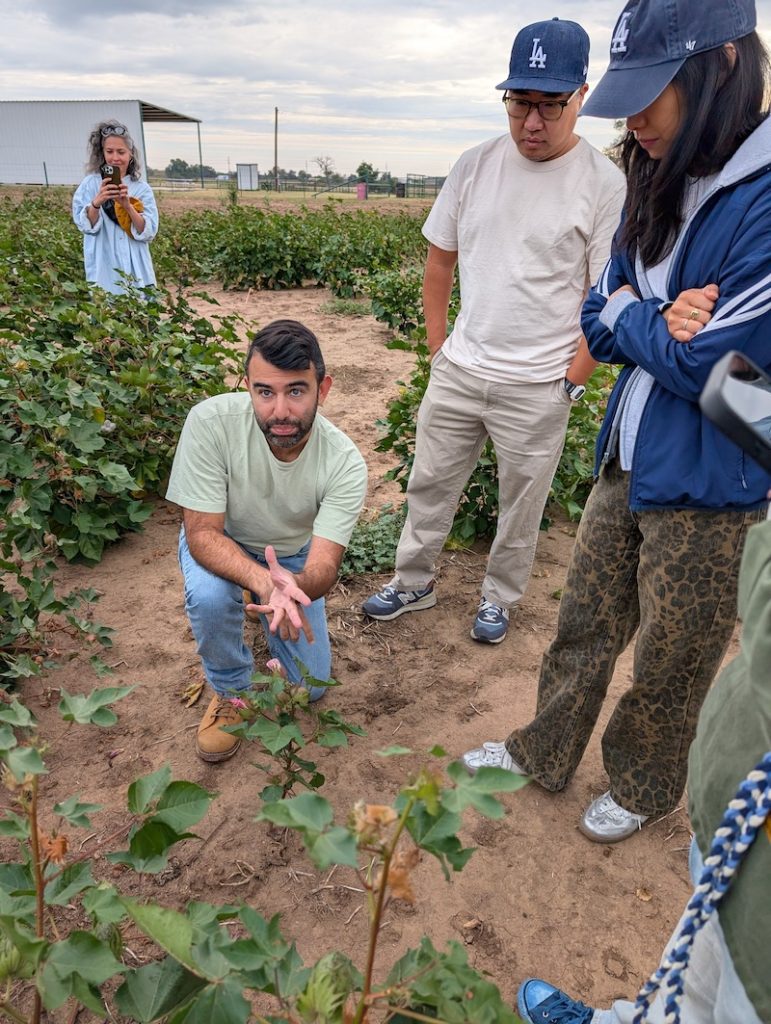
“Some of the cotton are wild variants that have never been used in production — but you need that diversity for machine learning,” Alvarez said. “Every variant has been genome-sequenced.”
The company is currently mapping the genomic architecture of cotton traits, such as fiber length and fiber strength. Avalo’s advanced machine-learning can select for a variety of needs: yield, water, nitrogen, heat resilience, fiber length and more, creating an efficient and profitable cotton plant.
New crops can take up to a decade and millions of dollars to develop. Avalo wants to develop crops for specific regions or traits and says it can achieve that — from concept to production — within 5 years at a fraction of the cost.
Each week, Avalo’s R&D field in Clarendon generates two terabytes of data, Alvarez said. The genetic data is another couple of terabytes. And it’s the same for Avalo’s two other R&D plots in Texas.
“Humans can’t sift through that much data,” he said.
The company flies drones over the field weekly to gather information such as red/green visible light and infrared reflection, which tells them how much photosynthesis is happening and the growth rate of each plant.
“You can’t replace humans but you can replace some of the work they do,” Alvarez said.
When the cotton is ready to be harvested later this fall, it will be picked by hand, sent to a small gin and then all fibers will be tested.
“This has to be a detailed process,” Alvarez said.
COTTON FACTS
- Texas is the largest producer of cotton in the US. The area where Avalo’s R&D plot is located was traditionally fed by the Ogallala Aquifer. But that aquifer is drying up and there is a need for drought-resistant cotton that can be grown in low-water, high-heat conditions. In 2020, 70 percent of cotton grown was irrigated. Today it’s 30 percent.
- Fiber characteristics are tied to water and nitrogen. Farmers typically rotate cotton crops with peanuts for the nitrogen input, which means they don’t have to use nitrogen fertilizer.
- Some cotton self-pollinates, but Avalo uses bees twice in the grow process: early on, they are released in the greenhouse and then once again in the field so genetic material is exchanged.
- Many seeds are designed to be pesticide-resistant, allowing farmers to spray their fields with pesticides without damaging their crops. The high heat of the Texas Panhandle means few insects. Avalo argues that cotton seed is often engineered to have traits that are not necessary in all conditions.
- Extrafloral nectaries (EFNs) are glands found on some plant species — including cotton. These glands produce nectar that attracts beneficial insects In cotton, the EFN is a hole at the bottom of the boll. Nectar drips down the stem and acts as bait for ants that drink the nectar and defend the plant from other insects.


